
Anatomy of the knee in dogs
The anterior cruciate ligament is particularly important in the knee joint - it enables the joint to move in a hinge and prevents the bony structures from slipping back and forth. Cruciate ligament rupture is still one of the most common orthopedic diseases in dogs and its symptoms are often unclear.
The diagnosis of cruciate ligament rupture is a typical sports injury in humans. Things are a little different with our four-legged friends. In addition to the traumatic causes, it is usually a “degenerative process” in dogs, which means that the cruciate ligament shows signs of wear and tear over the years, becomes increasingly thinner and eventually tears. The changes to the ligament structure increase with advanced age and as the dog's body weight increases (poor training also has negative effects).
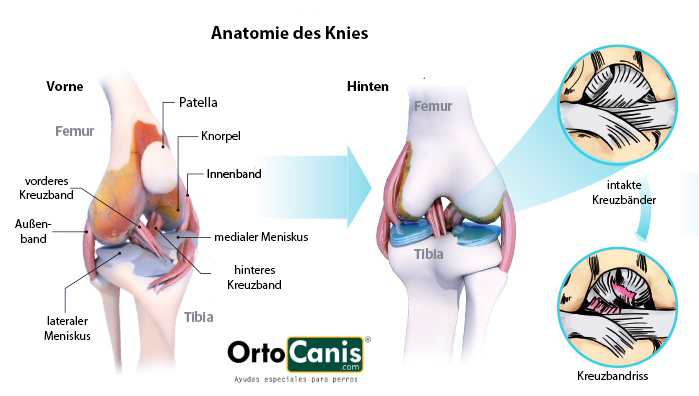
The structure of the knee joints in dogs and humans is somewhat similar. In your dog, the knee is also a hinge joint that connects the upper and lower leg as well as the kneecap. On the one hand, the cruciate ligaments prevent dogs from twisting their knees. On the other hand, they ensure that the bottom of your furry friend's paw does not slide forward.
The cruciate ligament is one of the most important tendons of the knee
Together with the collateral ligaments, the cruciate ligaments stabilize the knee joint. Each knee joint has an external and an internal cruciate ligament, which are actively involved in extending the leg. The cruciate ligament gets its name because the two ligaments cross in the middle of the knee joint. If one of the cruciate ligaments tears, the stability and mobility of the knee is severely limited.
Most important symptoms of a cruciate ligament tear in dogs
In most cases, a torn cruciate ligament in dogs is initially limping. Lameness varies depending on the degree of injury. With smaller tears, your dog may be slightly lame for a few days and then walk normally again. Such a previous injury increases the risk of a sudden jerk when your dog moves spontaneously and jerkily.
Dogs also pull up their hind leg and carry it in a bent position. They usually do not lift their paw: if at all, only the tip of the paw touches the ground.
also indicate a cruciate ligament tear in a dog:
Degenerative cruciate ligament rupture in dogs
The degenerative cruciate ligament tear in dogs occurs gradually, so that the injury in the dog is often not initially visible (hardly any symptoms). This is tricky because an unstable knee joint that no longer functions optimally will sooner or later severely limit the dog's mobility. Jumps and fast running are then hardly possible; braking abruptly hurts. Once a cruciate ligament tear has led to osteoarthritis, it is almost impossible to encourage the dog to move.
Your dog alternates between running briskly and walking very slowly. The affected leg becomes thinner due to muscle loss. The cruciate ligament hurts with every additional tear (otherwise dogs show no pain with degenerative ruptures).
Tearing of the anterior cruciate ligament occurs primarily in larger dogs and is characterized by different symptoms. Affected dogs show what is known as initial lameness , which can disappear completely after a few steps. That's why the dog owner often doesn't attach too much importance to the problem and just dismisses it as a strain. The fact is, however, that both a torn and torn ligament leads to the development of joint arthrosis within a few months.
Traumatic cruciate ligament rupture in dogs
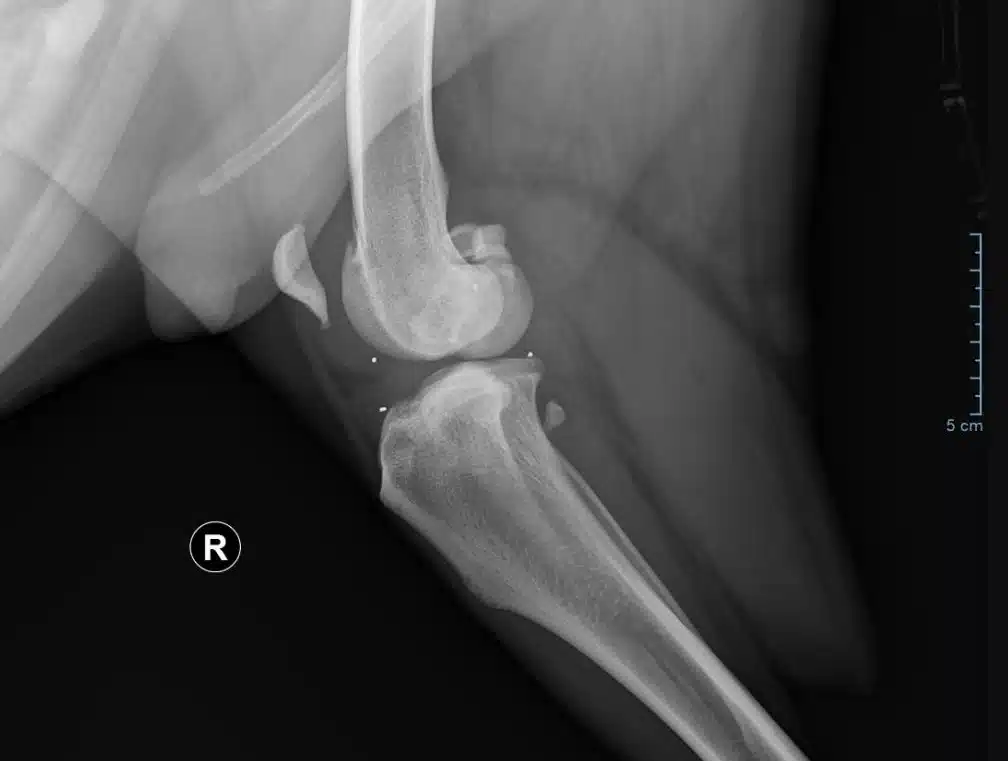
In the event of a traumatic cruciate ligament rupture ( can occur as a result of an accident - in this case it is called a trauma ) your dog shows sudden, acute lameness and pain at the moment of the accident and thus clear symptoms. Your four-legged friend stretches his leg out to the side while sitting. The knee joint is swollen. The hairy knee of the nose becomes “hot” (strong build-up of heat).
gait changes : the dog limps significantly in order to protect the painful joint. The joint – palpable at the top of the hind leg – can swell and become hot. Some dogs only howl briefly when injured and then show no symptoms. This is especially true if the tape is only torn but not torn. Sometimes dogs with a torn cruciate ligament stretch the affected leg out to the side while sitting or carefully stand on their tiptoes.
Here are some typical gait patterns/symptoms in the video: