
Which method now?
The veterinary literature is inconclusive regarding the “best” therapeutic option of TPLO vs. TTA vs. ZLig vs. suture reins for a defective anterior cruciate ligament; in other words, the literature allows for several options.
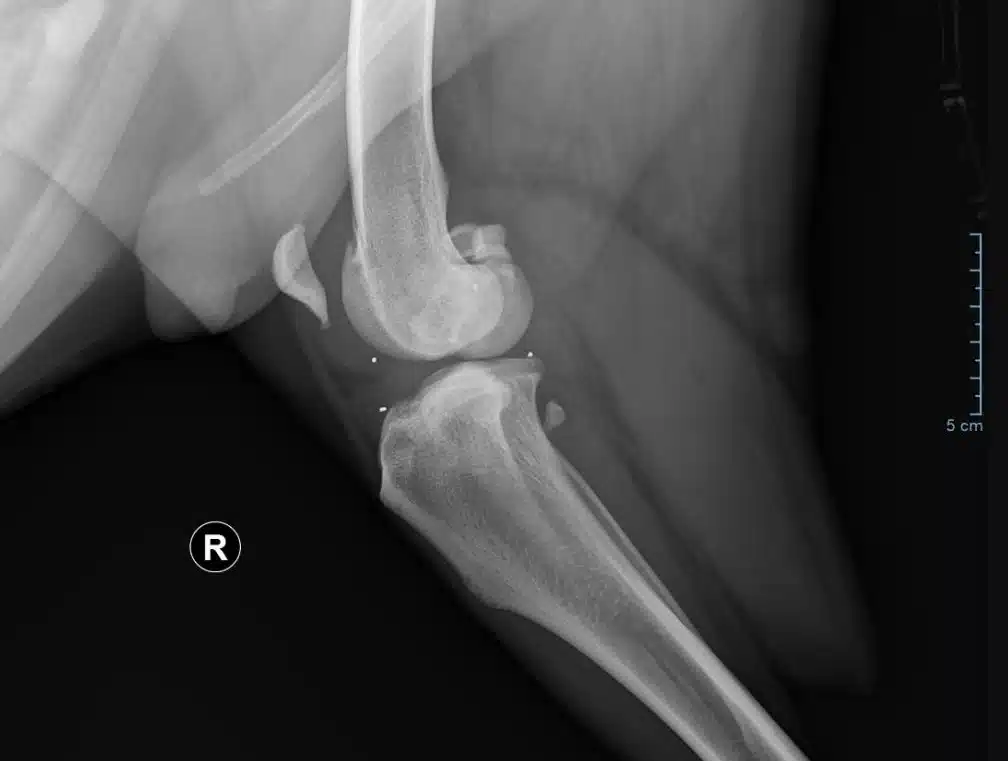
Zlig / Petlig method ®
, medium-sized dogs with straight long legs are, however, excellent candidates for ZLig surgery - see also our own study 1 and a long-term study from 2012-2021 2.
But small, lively dogs with lower body weight and bilateral cruciate ligament tears are also ideal for a Zlig method modified by us - the so-called Petlig Method ® . The advantage here is that both cruciate ligaments can be replaced at the same time in one operation, so the risk of anesthesia is reduced and the strain after the operation is not one-sided.
TPLO
TPLO for large or giant breed dogs with cranial cruciate ligament disease and for patients who wish to return to an athletic lifestyle. But even breeds that have a steep tibial plateau or fundamental lateral instability should only be operated on using the TPLO method. These are, for example, Old English Bulldogs, Dobermans, some Lanbrador breeds or Rottweilers.
The reason is simply that their physiognomy is inherently problematic - and if a cruciate ligament tear occurs at a relatively young age (<5 years), our experience is that even the best artificial cruciate ligament cannot be better than the original one natural.
TPLO vs TTA
Two published literature reviews 3,4 failed to identify a clearly superior surgical procedure due to different study designs and often subjective data comparisons. The principles of evidence-based decision-making in medicine will undoubtedly be useful in answering this question as we collect more data in a prospective and standardized manner.
Until then, decision-making should be based on the available data. Both TTA and TPLO appear to be good procedures for the treatment of cranial cruciate ligament injuries in medium and large breed dogs.
These procedures may also be considered in smaller, more active patients and in those with bilateral disease.
TPLO/TTA should always be considered for patients who have failed other procedures.
Some dogs are not good candidates for a TTA or ZLig due to too steep an angle of the tibial plateau , coexisting patellar luxation, or excessive concavity of the tibial crest. In these cases, TPLO represents an excellent and often only alternative.
Dr. Dr. also provides a comprehensive comparison between the two methods. Monika Höpfl in her dissertation from 2011 - source 5.
Other alternative methods to TPLO vs. TTA vs. ZLig vs. thread reins
Cheaper and proven methods for small dog breeds are
- Lateral thread rein (according to Floh, De Angelis)
- Capsule and fascia tightening
- Tight rope (Arthrex)
Decision Making TPLO vs. TTA vs. ZLig vs. Thread Reins
Many factors play a role when making a decision about a medical treatment recommendation.
Everything from patient compliance to the client's financial concerns to the availability of surgical equipment and expertise impacts the course of a case. The analysis of solid scientific data will help us, but it will only be one piece of this complex puzzle. It's sometimes frustrating for everyone involved to make these decisions.
Recognize and name these frustrations through open communication with your veterinarian and be open about your concerns!
References TPLO vs. TTA vs. ZLig vs. thread reins
1 Own study on the subject of Zlig: https://tierarzt-karlsruhe-durlach.de/wp-content/uploads/2021/12/Arndt-HR18-korr2.pdf
2 Veterinary Clinic La Cardelle, 84 Chemin dit de Cannes 06530 LE TIGNET, FRANCE: https://vetlig-global.com/wp-content/uploads/2022/04/PROSPECTIVE-STUDY-UPDATE-JANUARY-2022.pdf
3 SE Kim et al. Tibial Osteotomies for Cranial Cruciate Ligament Insufficiency in Dogs. Vet Surg (2008) 37:111–125.
4 CL Aragon, SC Budsberg. Applications of Evidence-Based Medicine: Cranial Cruciate Ligament Injury Repair in the Dog. Vet Surg (2005) 34:93–98.
5 Monika Höpfl, Munich, 2011, https://edoc.ub.uni-muenchen.de/13298/1/Hoepfl_Monika.pdf